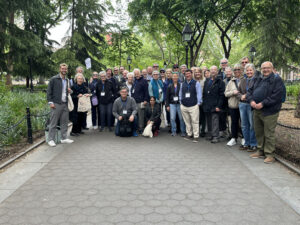
On May 14 and 15, 2026, the LAI New York Chapter hosted a series of events on New York City history to commemorate the U.S. Semiquincentennial. We were thrilled to welcome so many LAI members from chapters across North America, including Baltimore, Boston, Chicago, San Diego, Toronto, and Vancouver.
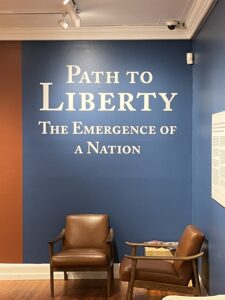
The program kicked off with a visit to the historic Fraunces Tavern Museum in Lower Manhattan, where George Washington famously bid his officers a tearful farewell at the end of the Revolutionary War. Following the tour, attendees remained at Fraunces Tavern for lunch, where we were honored to receive a formal welcome from Manhattan Deputy Borough President Miesha Smith.
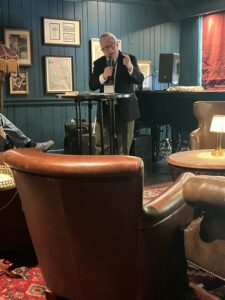
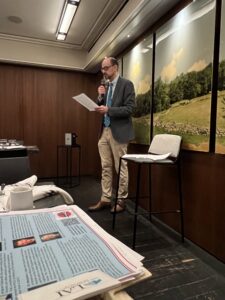
The luncheon keynote speaker was Dr. Robert Snyder, who discussed his experiences serving as Manhattan Borough Historian from 2019 to 2025. His talk was followed by a fascinating panel discussion featuring Dr. Snyder and Dr. Peter Aigner, the Director of The Gotham Center for New York City History. Together, they shared insights on their work as publicly engaged historians and the importance of connecting history to contemporary civic life.
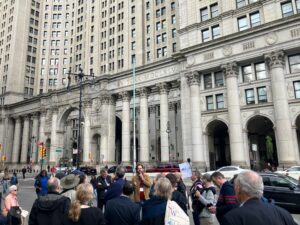
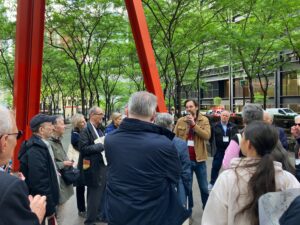
After lunch, attendees enjoyed a Revolutionary War walking tour from Bowling Green to City Hall Park, led by Dr. Aigner. The tour highlighted several important events and locations from the era, including Bowling Green, where Patriots famously pulled down the statue of King George III, and the site of Canvas Town, a shantytown that emerged after the Great Fire of 1776, stretching from Trinity Church north to St. Paul’s Chapel.
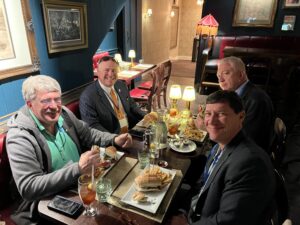
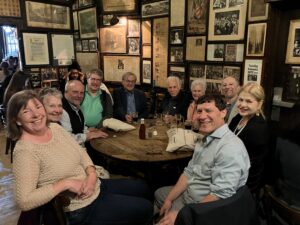
Thursday evening’s dinner at the Ukrainian East Village Restaurant featured a keynote talk by Barnet Schechter on the 1776 Battle of Brooklyn. Although the Continental Army suffered defeat, Washington’s daring nighttime escape from Brooklyn to Manhattan enabled the army to survive and continue the fight for independence.
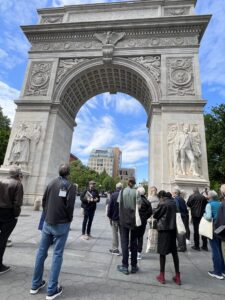
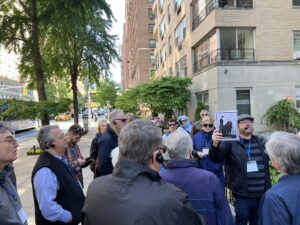
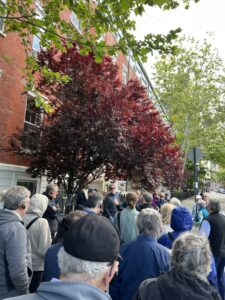
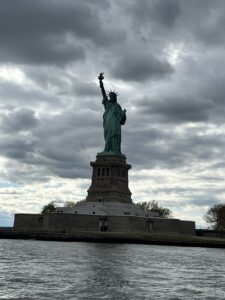
On Friday, attendees were treated to an engaging walking tour of Greenwich Village and Lower Fifth Avenue led by Justin Rivers of Untapped New York. Justin described the neighborhood’s emergence and transformation in the years following the Revolutionary War. The official program concluded with a lunch at Loring Place restaurant with a keynote lecture by Professor Benjamin Carp, who presented the history of the Great Fire of 1776. His talk dispelled many of the myths and misconceptions surrounding the fire. After the events, attendees enjoyed a relaxing, fun cruise around New York harbor.
Over the course of two days, attendees came away with a deeper appreciation for New York’s central role in the Revolutionary War and for the ways the city developed and grew during the Early Republican era.